Case Study They Bought One. Then Another Only Seven Months Later.
While the first robot was brought in to break a sanding bottleneck, its immediate impact made the decision to add a second unit just seven months later an easy one.
“Automation definitely helped scale our business. We grow 10–15% every year in volume while our headcount stays the same.”
— Ryan Barbiaux, Vice President
OVERVIEW
In under seven months, Cabinet Creations and Design eliminated a sanding bottleneck, stabilized throughput, and ordered a second PSA-80 PRO. The second purchase was not reactive. It was a calculated capacity decision backed by measurable results.
THE PROBLEM Growth Was Accelerating. Sanding Couldn’t Keep Up.
Cabinet Creations and Design was experiencing steady demand growth in a tightening labor market. Sanding roles were increasingly difficult to staff, physically demanding, and inconsistent in output.
Leadership faced a structural risk:
Throughput depended heavily on labor availability
Results varied by operator skill
Quality relied on visual judgment
Hiring more sanders would increase cost and volatility
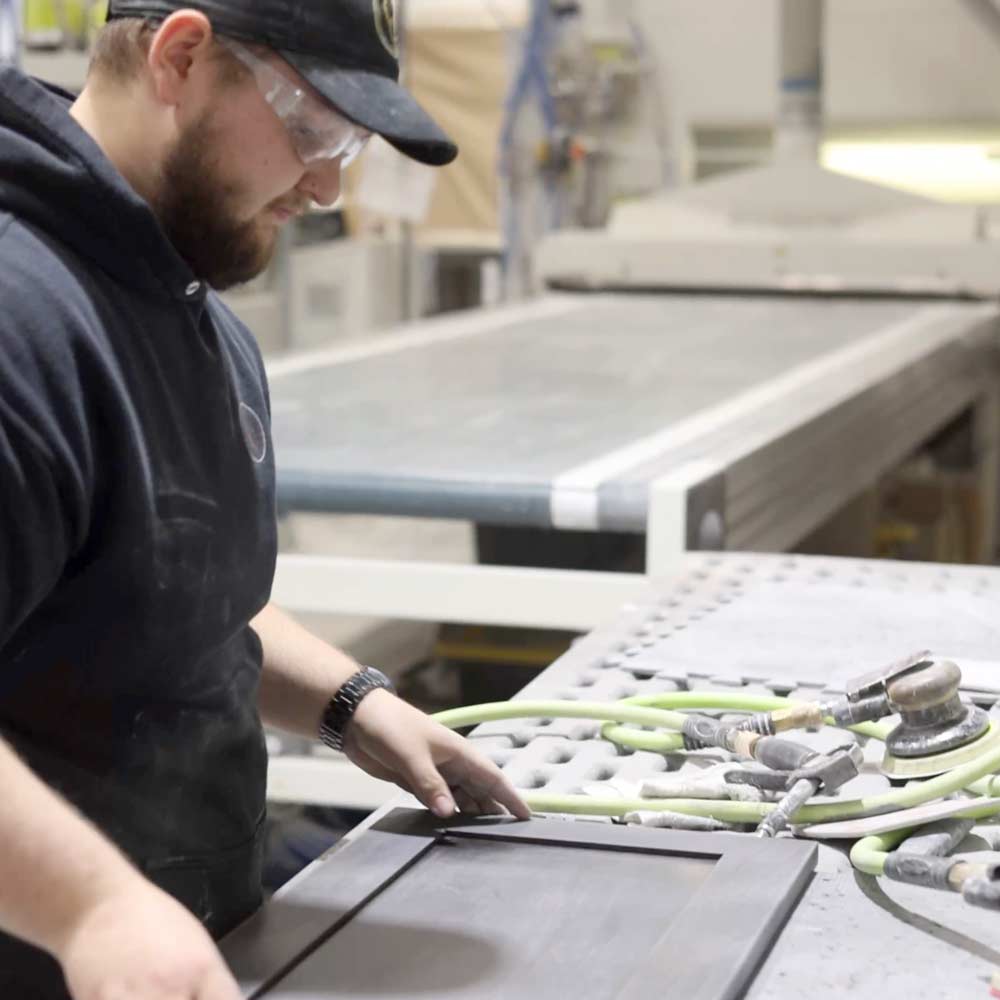
Before automation, sanding was largely manual, supported only by an older sanding robot limited to MDF primer work.
“Results depended heavily on individual skill and visual judgment. Consistency and quality were ongoing challenges.”
— Ryan Barbiaux, Vice President
Cabinet Creations and Design’s growth was limited by its finishing team’s throughput, not by the market demand.
“Hand sanding is the least enjoyable job in cabinet making.”
— Ryan Barbiaux, Vice President
THE SOLUTION Converting Sanding from Labor-Dependent to Predictable Production
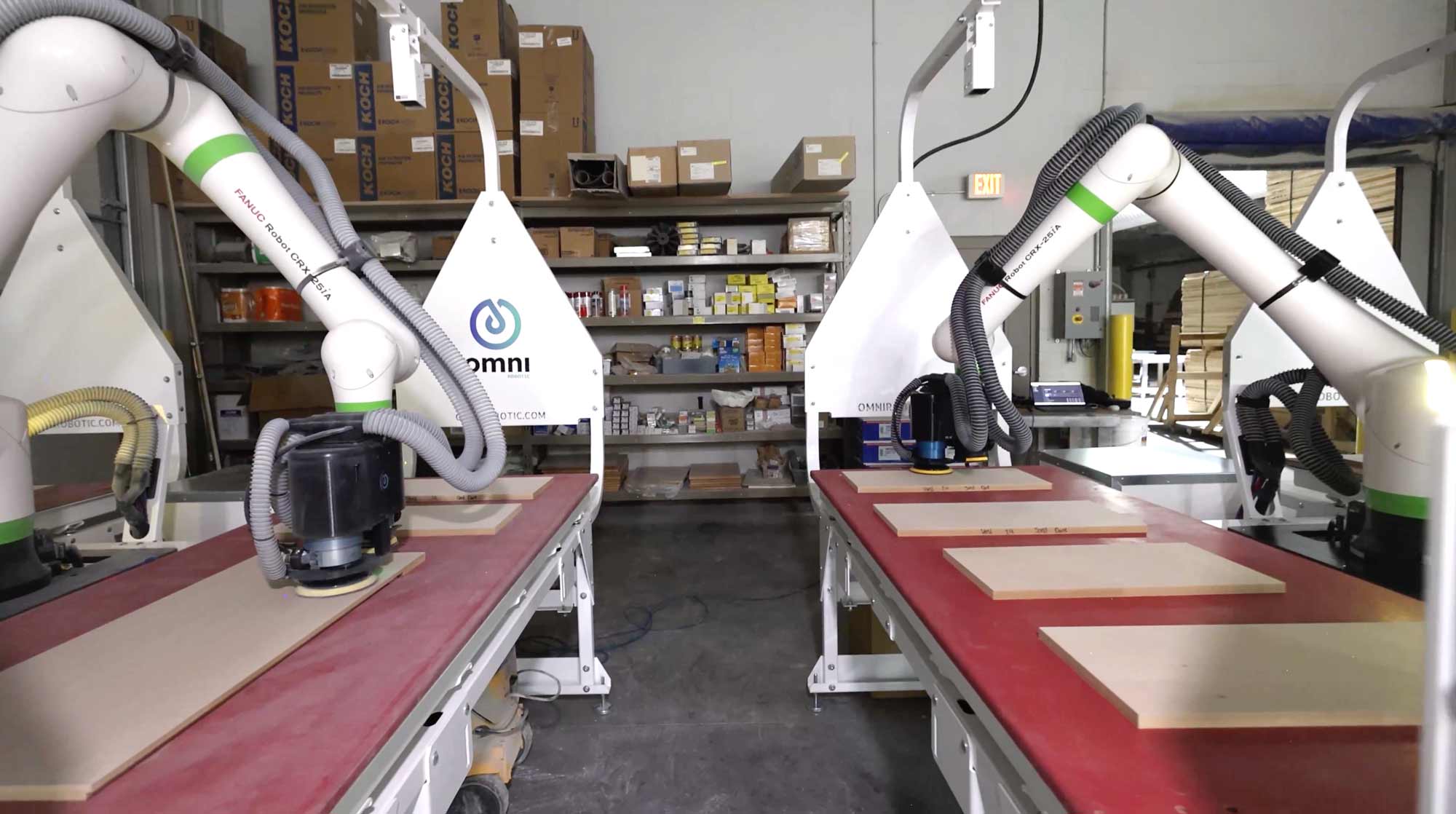
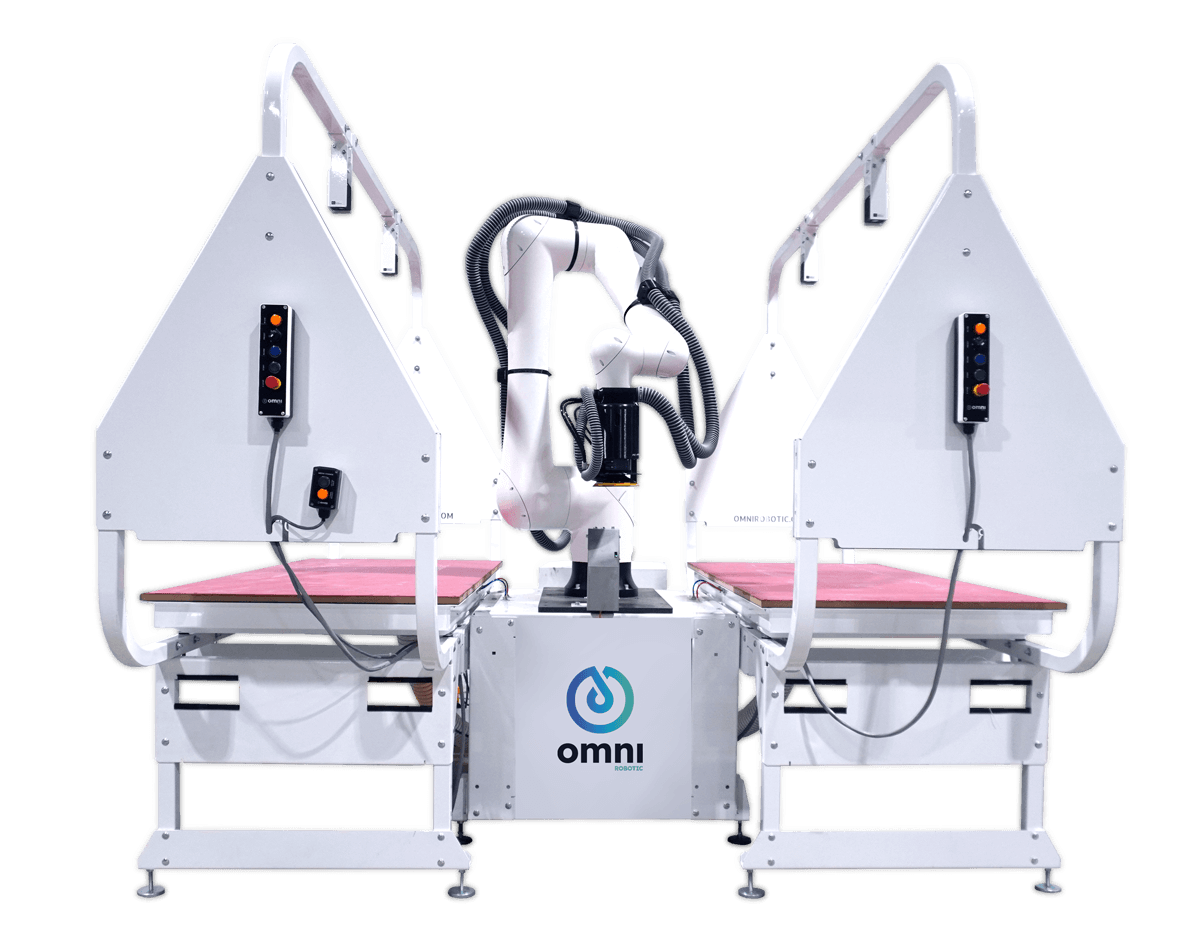
After evaluating multiple technologies, Cabinet Creations and Design selected the PSA-80 PRO to bring stability and repeatability to finishing.
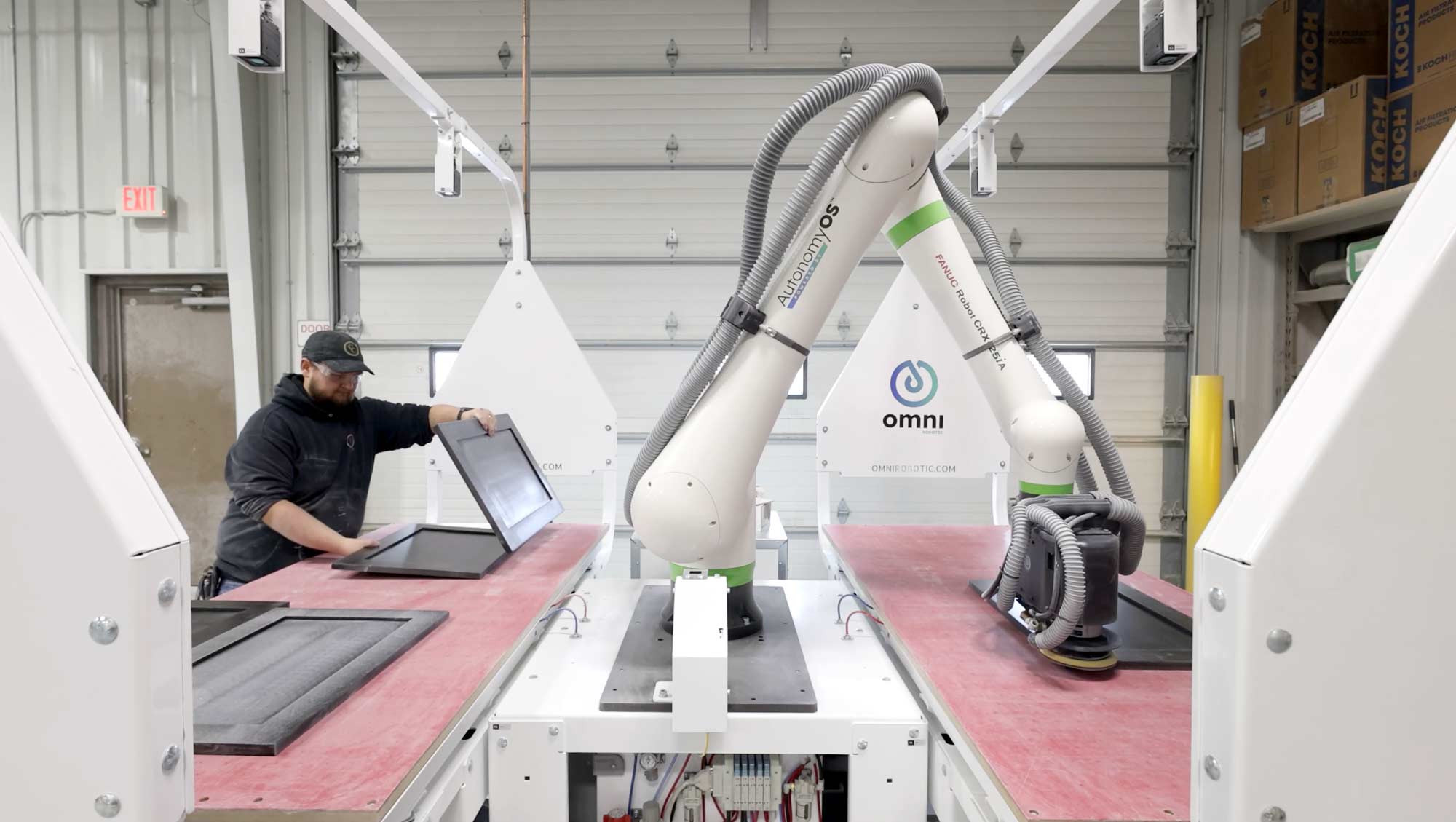
The system integrated into daily operations with minimal disruption. Installation took only 4 hours. Operators were productive immediately.
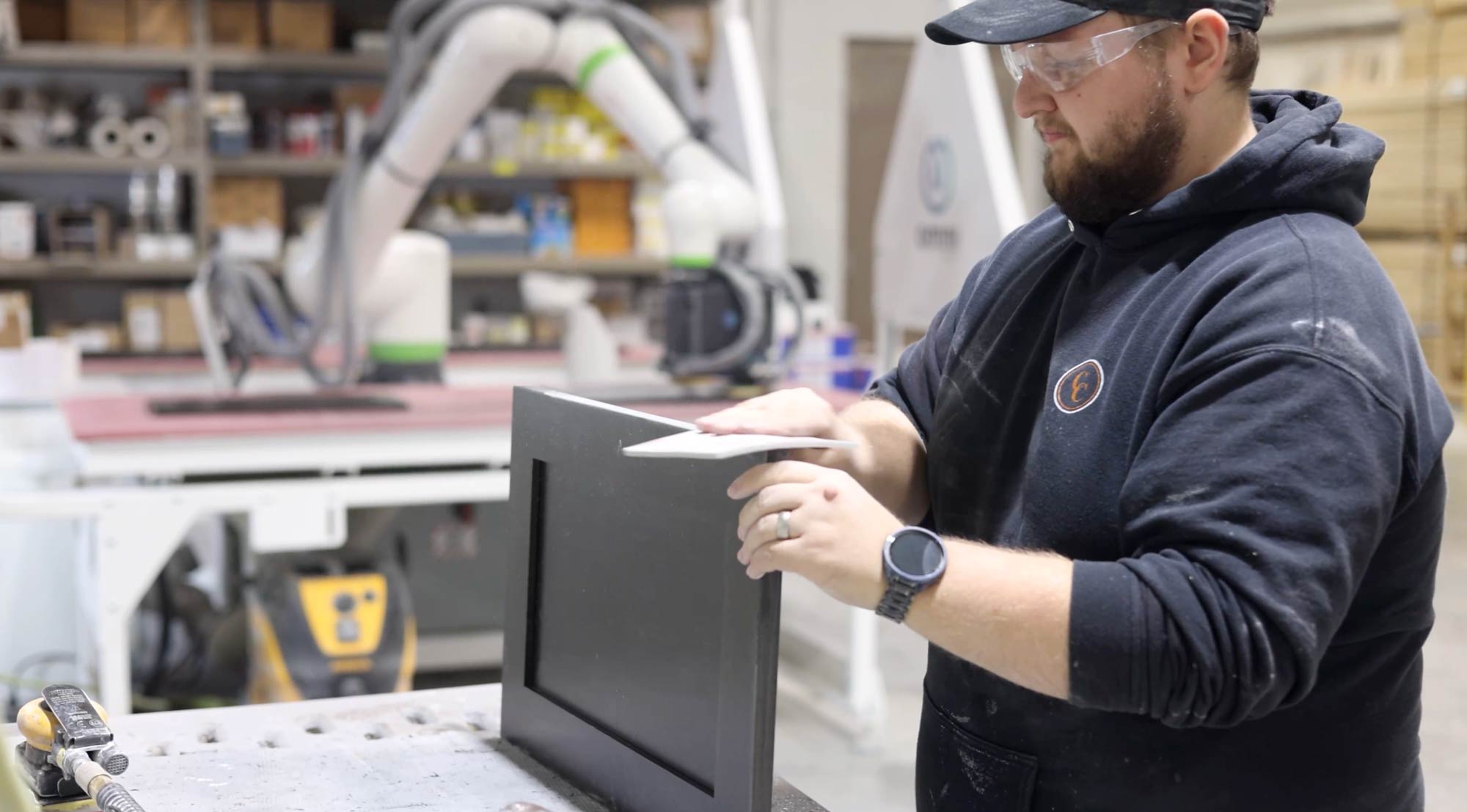
Instead of babysitting equipment, operators could run sanding autonomously while attending to adjacent production tasks.
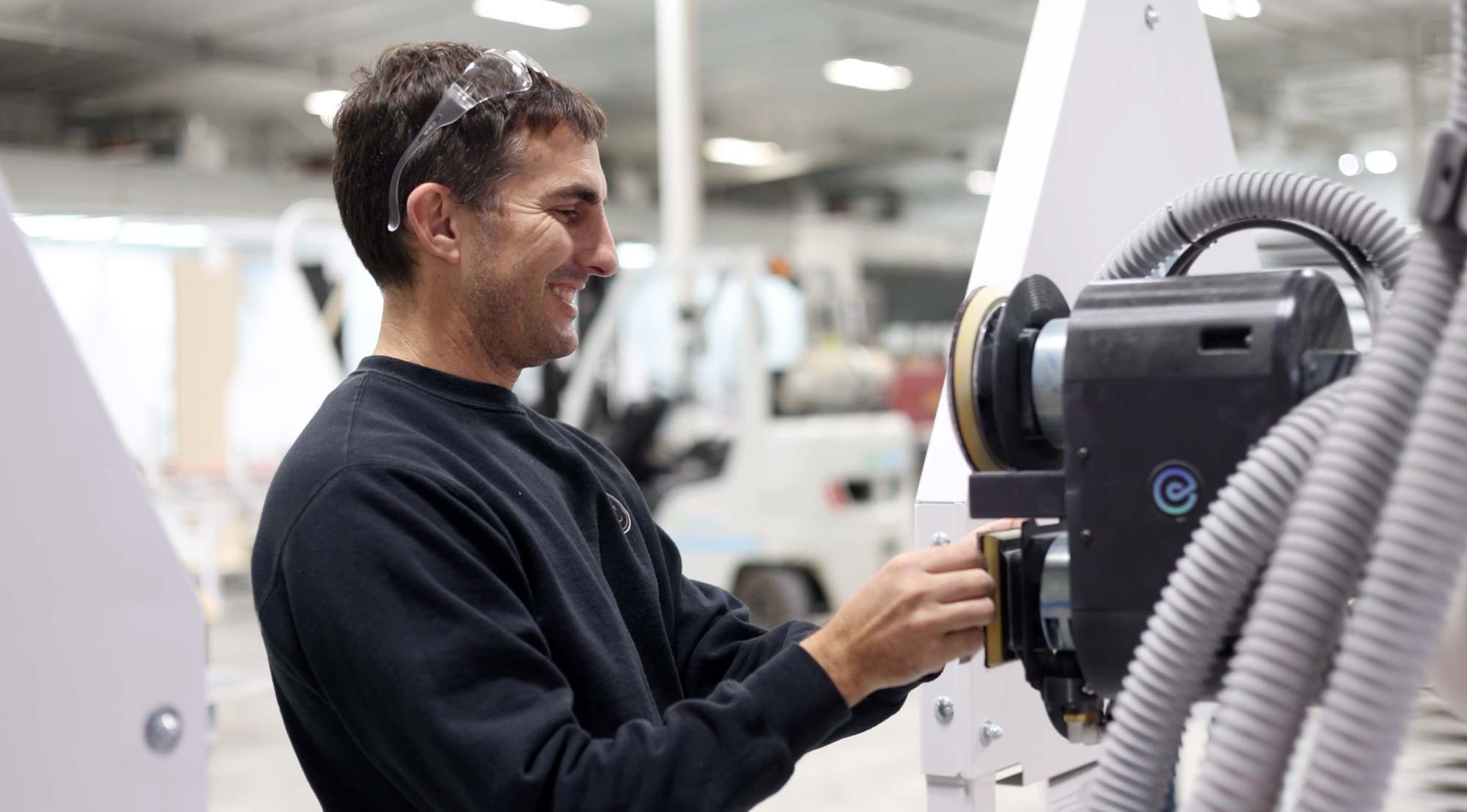
“I can set it, let it run, and work on other things. It’s not like other machines where you’re babysitting it the entire time. I can really trust it.”
— Trent Jandrin, Paint & Finish
On the floor, the impact was immediate.
The robot now runs consistently throughout the day, allowing staff to focus on spray booth preparation, maintenance, and workflow optimization.
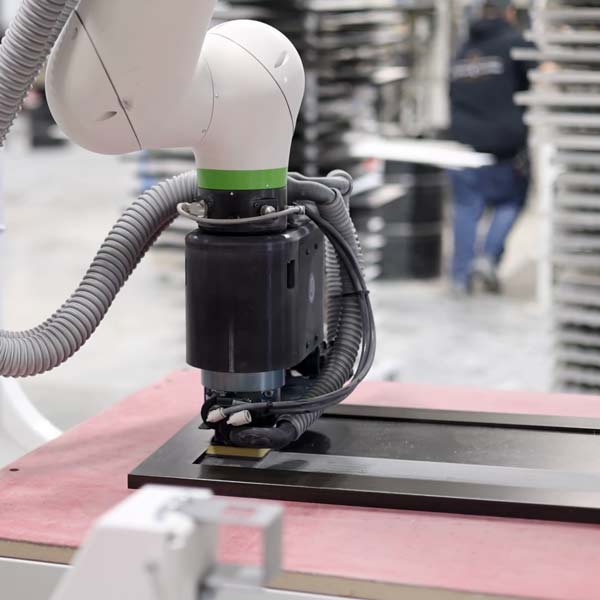
“The part that I’m most impressed with is the way it can read the profiles of the doors and how close we can get to edges.”
— Ryan Barbiaux, Vice President
THE RESULT The Measurable Impact
Within months, sanding transitioned from a variable constraint to a controlled production function.
5 employees worth of sanding capacity added
Labor previously tied to repetitive sanding tasks was redeployed to higher-value work.
Surface Consistency Standardized Across Every Door
Consistent finish quality, independent of operator variability.
Rework and Waste Reduced by 35%²
Improved process stability significantly lowered touch-ups, over-sanding, and material scrap
~10–15% Annual Growth Without Expanding Headcount
Automation absorbed demand increases without hiring.
~$275,000 Annual Labor Reduction
Based on regional labor cost benchmarks for cabinet sanders.
Improved Employee Productivity and Engagement
Less repetitive sanding. More skilled, value-added work.
Why They Ordered a Second PSA-80 PRO
Seven months after installing their first PSA-80 PRO, leadership added a second. Sanding was no longer a bottleneck, quality had become predictable, and automation had proven itself as a driver of growth.
The second system delivered:
Scalable production without adding headcount
Reliable, predictable deadlines
Capacity for more complex, detailed projects
Greater operational efficiency
Better employee retention
Automation became a growth multiplier, empowering the team to take on more, faster, and better.
“I don’t need to find extra people to meet deadlines. It takes a lot of workload off my shoulders.”
— Trent Jandrin, Paint & Finish
Operators didn’t lose jobs, they expanded skills, reduced physical strain, and gained reliability. The PSA-80 PRO became a daily production asset.
From Bottleneck to Strategic Capacity
Before automation, sanding limited throughput and growth depended on labor. After automation, throughput became predictable, growth absorbed without new headcount, and leadership doubled capacity proactively.
For Manufacturers Facing Similar Challenges
If sanding is hard to staff, physically demanding, inconsistent, or limiting growth, the question isn’t whether automation works, it’s what happens when sanding stops being your bottleneck.
Based on state labor data and industry benchmarks, a 35-employee Wisconsin shop (2026) spends ≈$60–63k/year per cabinet sander (multiplier ≈1.33×); ACA optional, small team may increase admin/cross-training load.
²
Manual sanding leads to inconsistent results, fatigue, and costly scrap. Automation ensures uniform quality, cutting waste and rework by over 35%
Take Your Sanding Process to the Next Level
Tell us what you’re sanding, and we’ll show you how the PSA-80 PRO gets it done.